Writing by Mimi Park
In still life, there is always stillness.
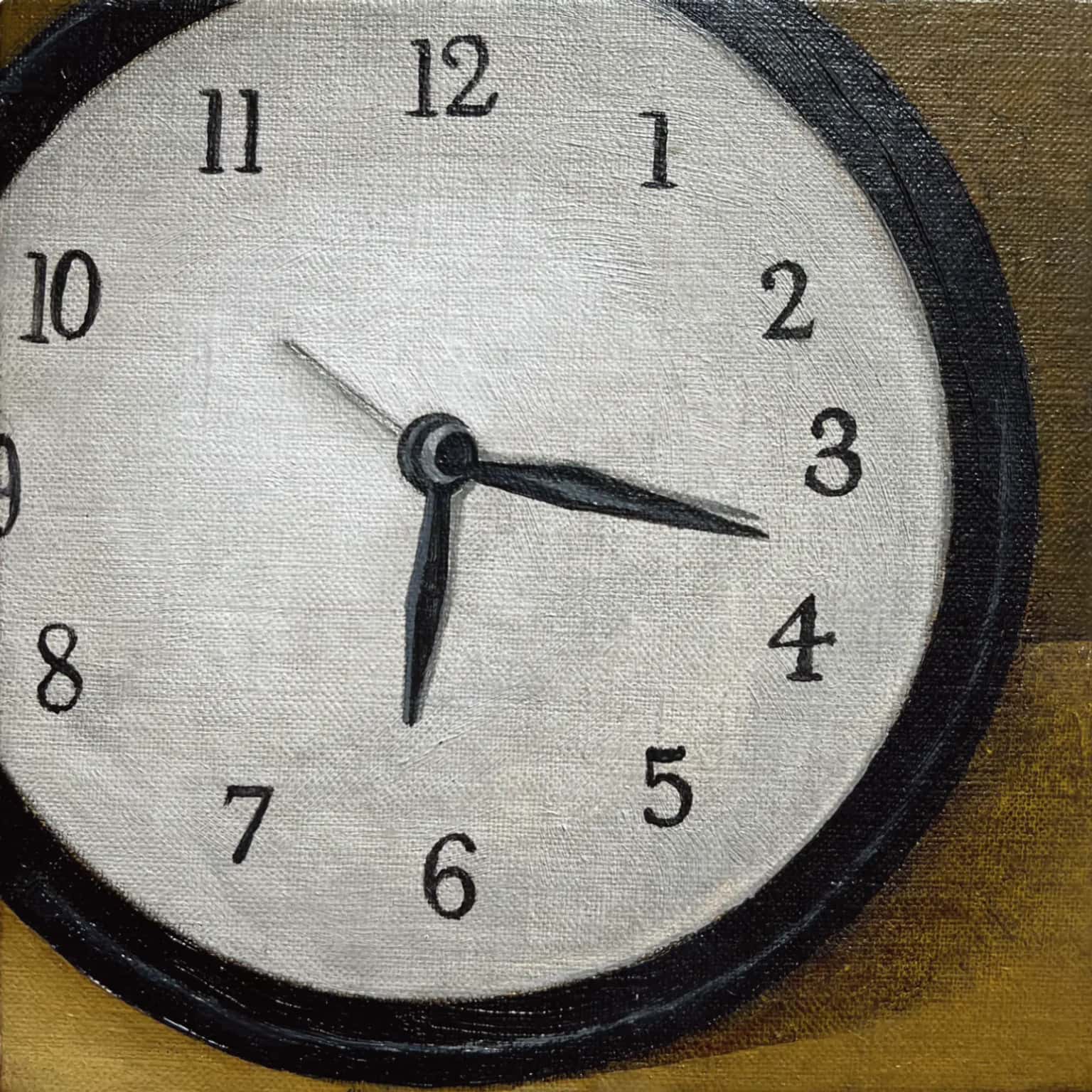
Still life also comes from life, which could mean two different things. In art, still life traditionally means works depicting objects that remain still(which means they are not living things) painted from life. “From life” means it is painted directly from observation, not from a photo or imagination. Also, still life deals with the objects from everyday life or a person’s life. Something mundane and intimate. They are bowls, fruits, flowers, books, or wine bottles. Taking these everyday things, putting them on a surface, and stepping back to look at them creates a moment of stillness. For a fraction of a second, time comes to a stop, which engenders a stare or contemplation. This sequence is one of the fundamental conditions of still life.
Still life has always been a minor art. In the history of art, from the 16th century and on, history(religious, mythological) paintings with narratives and allegories were placed at the top of the hierarchy; portraits and landscapes were next in line. Still life innately has hardly any narratives. In ancient Egypt, when still life was first painted, a painting of food actually meant food that the dead could nourish. There is an almost primitive directness in still life from the beginning. As a genre, it didn’t get to develop an independent allegorical presence until the 17th-century Netherlands painters found a theme for still life, vanitas. Once it obtained a legitimate metaphorical power and popularity, it often became big in size and ostentatious in style. However, it reclaimed its humble and intimate presence in the 19th-century French art scene. Since still life lacked the narrative and had simple nature, it fit what Modernism required: removing literary aspects in painting. Through Cubism, it acquired its peculiar status in Modern art.
Although the subject matters in still life are often ordinary objects from everyday life, still life requires or is subject to an “artful” arrangement. This is where the conceptual possibility of the genre sneaks in. Compared to other forms of art making, it is a genre where artists can manipulate their subject matter based on their mental picture and conceptual agendas. Since it involves an arrangement, it could have collage-like quality. Also, since the subject matters are always around and it can be made in a small format, a still-life painting can be made and remade, which enables artists to find new forms. Apart from the allegory of the transience of life that still life has consistently been associated with, it is a genre of regeneration and innovation.
Guy Davenport said in his book, Objects on a Table, that “Age after age, still life has run its course from innovation to triteness, dissipating itself in familiarity. Inevitably, it has regenerated itself, usually as the stylistic forerunner of a new direction in the arts or as the epitome of style.” Still life as a genre could mean what its subject matters are destined to allude to; everything inevitably ends. But then again, this simple fact reminds us that there will be a life after that. In still life, we are to stare in stillness at the space between life and death, this life and life after that.
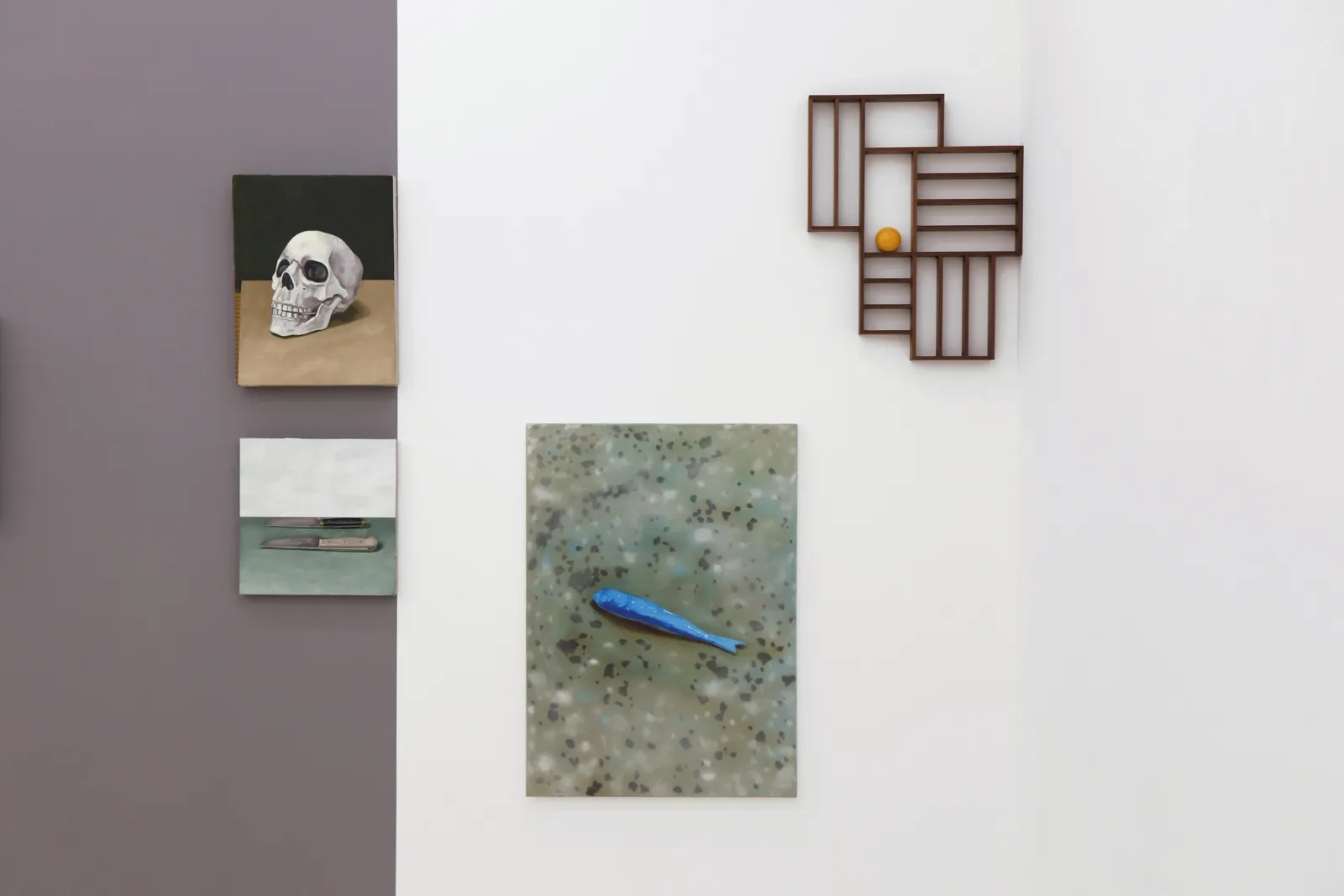
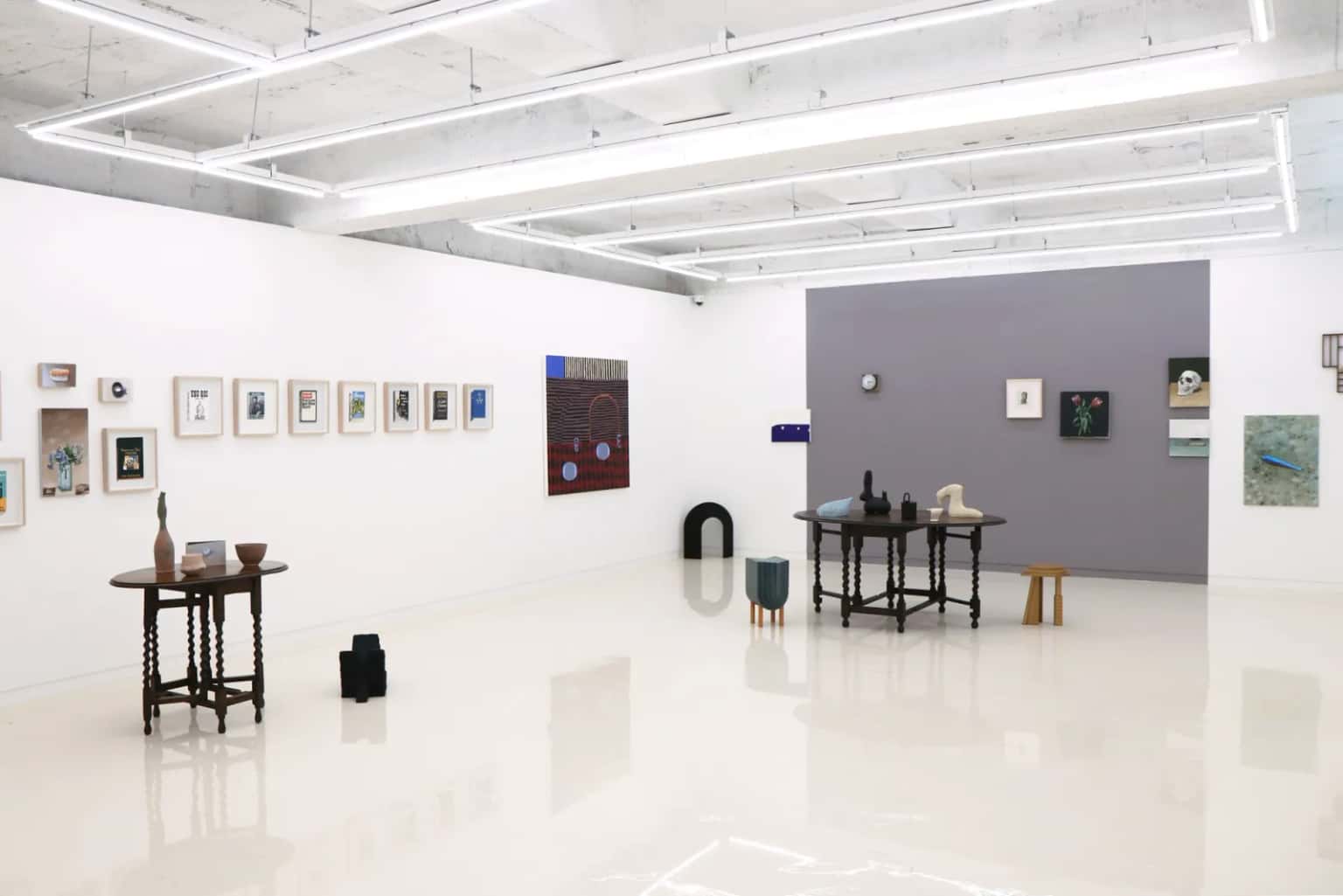
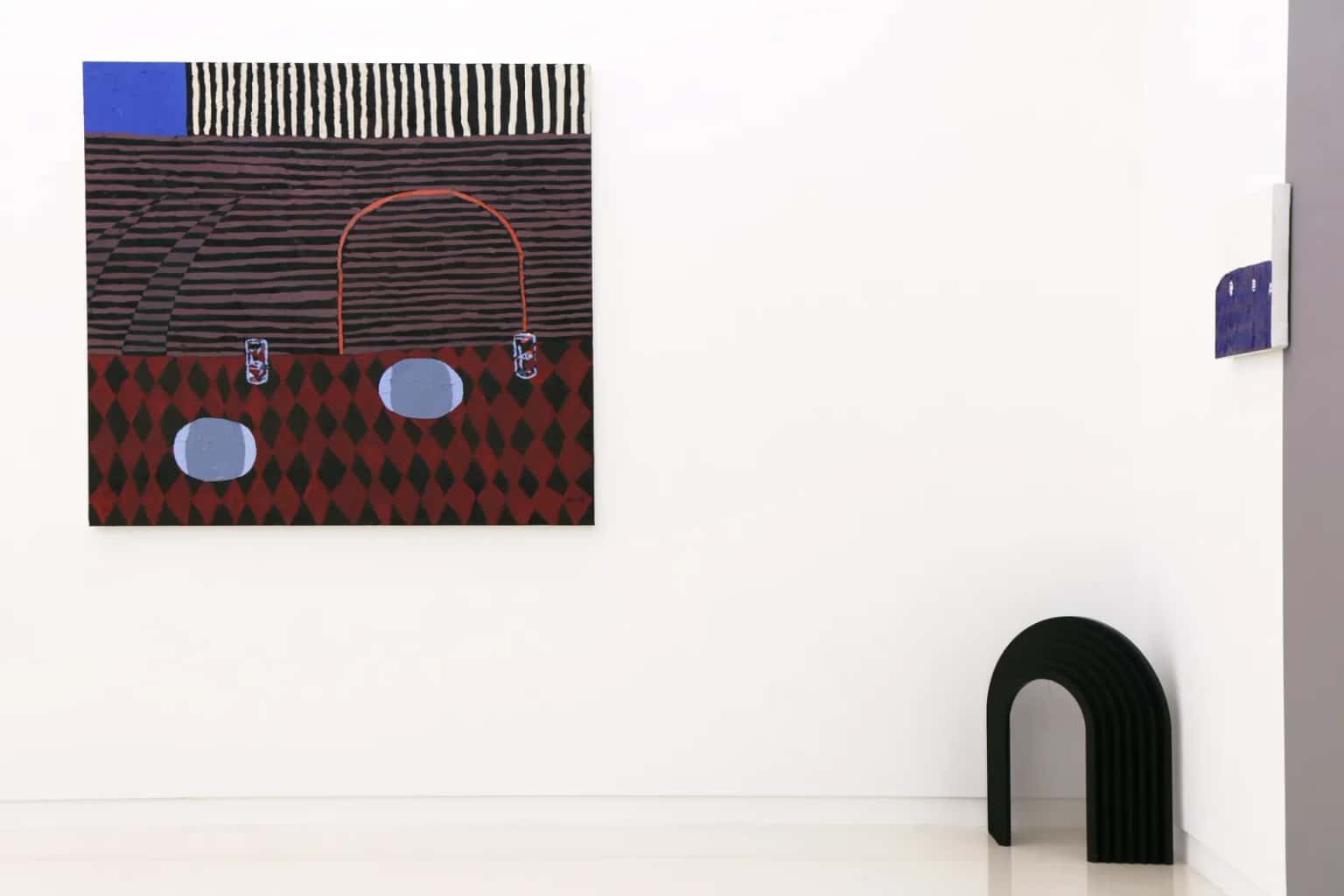
The exhibition features paintings by Richard Baker, Sanghyuk Kim, Alex Lemke, and Nathaniel Robinson, as well as sculptures/objects by Carl D’Alvia, Trevor King, Lee Eunu, and Haewon Sohn.